Briefing
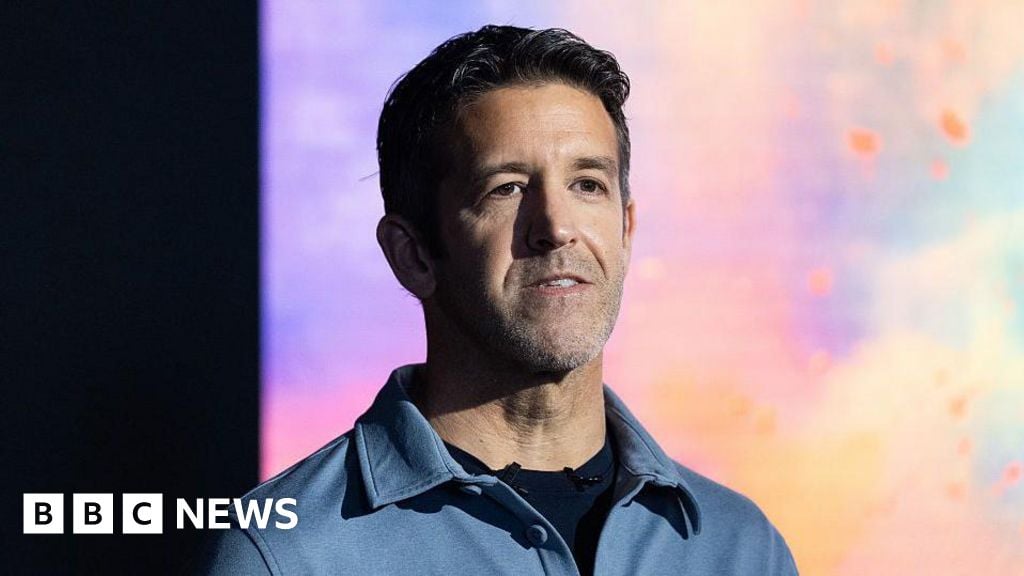
- Apple announced Monday that John Ternus, 50, currently senior vice president of hardware engineering, will succeed Tim Cook as CEO on September 1, becoming the company's eighth chief executive.
- Cook, 65, will remain CEO through the summer to manage the transition, then assume the role of executive chairman; existing non-executive chairman Arthur Levinson will shift to lead independent director.
- Johny Srouji, previously senior vice president of hardware technologies, will become chief hardware officer in an expanded role, taking over Ternus's engineering portfolio.
- Cook's tenure of more than 15 years, having succeeded founder Steve Jobs in 2011, saw Apple revenue rise to over $400 billion annually and market capitalisation grow roughly 24-fold to $4 trillion at Monday's close.
- Ternus inherits a pipeline of roughly 10 major new product categories, according to Bloomberg, along with a rebounding China business and the strategic headaches of an AI deficit and dependence on iPhone revenue.
- Apple delayed a Siri upgrade, replaced its AI leadership in December, and is now building on Google's Gemini model for a refreshed assistant; Ternus also faces growing pressure on the App Store's 30% commission structure.
Analysis
- Ternus inherits Apple's AI deficit at the worst possible moment: the company is building its refreshed Siri on Google's Gemini rather than proprietary models, and its prior AI leadership was replaced only in December. A new CEO without a clear first-party AI architecture telegraphs continued dependency on Google, which sustains Apple's antitrust-adjacent revenue share arrangement with Alphabet even as that arrangement faces regulatory scrutiny. Any stumble in Ternus's first AI product cycle will be attributed to the transition, compressing AAPL's premium multiple.
- Cook moving to executive chairman rather than a clean exit creates a dual-authority risk that markets have previously penalized in other large-cap transitions. Ternus's mandate is hardware-first by background at a moment when Apple's critical gaps are in software AI and services strategy. If Ternus cannot credibly own the AI roadmap without Cook's shadow, institutional holders who bought AAPL on Cook's capital return discipline will face an ambiguous governance period during which buyback pace and dividend policy are the only stable value anchors.
- Ternus's background is hardware engineering, and the briefing notes Johny Srouji takes an expanded chief hardware officer role covering Ternus's prior portfolio. This concentrates Apple's silicon and device roadmap in Srouji, whose Apple Silicon program is Apple's strongest competitive moat. The risk is that two senior hardware executives now share the top of the org chart while no credible internal AI software leader has been publicly named, leaving the AI product gap structurally unaddressed at the leadership level.
Historical Context
- 2018-2019
Google renewed its default search agreement with Apple for an estimated $12 billion annually. That arrangement is now under antitrust scrutiny and maps directly onto Apple's choice to build Siri on Gemini, creating regulatory exposure that a new CEO inherits without having negotiated the original terms.
- 2013-2014
Microsoft's board replaced Steve Ballmer with Satya Nadella, an internal engineering executive, in a transition that initially drew skepticism. Nadella's pivot to cloud took 18 months to show up in revenue, suggesting markets may similarly require a full product cycle before re-rating Ternus's AI strategy credibly.
- Aug 2011
Steve Jobs resigned as Apple CEO and became executive chairman, with Tim Cook succeeding him. Jobs died six weeks later, making the transition effectively immediate. The Cook-era playbook of operational excellence and capital returns then dominated for 15 years, setting the benchmark Ternus now inherits.
Connected Events
Anthropic fielding VC investment offers at up to $800bn valuation
Anthropic is fielding VC investment offers at up to $800 billion, and Claude Mythos is drawing Pentagon and financial regulator scrutiny. Apple's decision to build Siri on Google Gemini rather than Anthropic or an in-house model signals that frontier AI capability remains concentrated outside Apple's control at the exact moment rivals are racing to lock in proprietary model access.

Disney cuts 1,000 jobs under new CEO Josh D'Amaro
Disney's new CEO Josh D'Amaro cut 1,000 jobs including at Marvel and ESPN within weeks of taking the role, using the leadership transition to restructure operations. Ternus faces analogous early-tenure pressure to demonstrate strategic decisiveness on AI, where Apple's deficit is well-documented and institutional patience is finite.
Further reading

See Indexa more often on Google
Mark Indexa as a preferred source — your Top Stories will surface more Indexa coverage.