Briefing
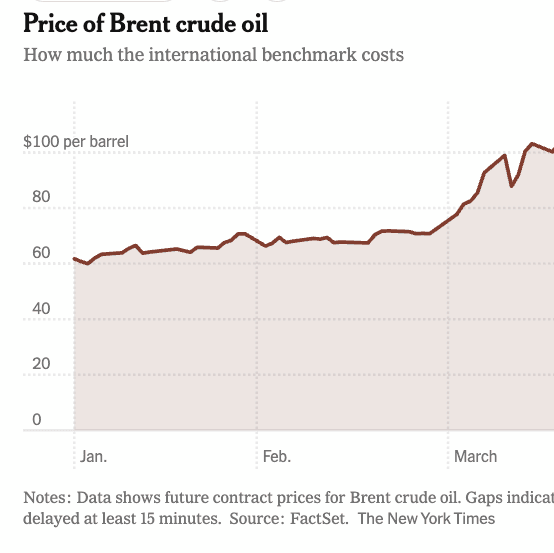
- Renewed tit-for-tat US and Iran strikes over the weekend have reignited supply-disruption fears, pushing oil prices to a multi-week high and unwinding the slide toward pre-war price levels.
- Brent crude has risen above $87 a barrel after the latest US strikes on Iran and a looming blockade, according to NBC News, a sharper move than earlier reported figures.
- The US and Iran are actively disputing whether the Strait of Hormuz remains open to ship traffic, with both sides trading strikes in and around the waterway, according to CNBC.
- Iran has launched attacks on tankers near the Strait of Hormuz and struck five US allies in the region, compounding shipping disruptions and driving oil prices sharply higher, according to The Guardian and OilPrice.com.
- The US has reinstated its Iran blockade, adding a further supply-disruption dimension to the rally, according to QZ.com; The Economist warns that Trump's Hormuz brinkmanship is worsening a global fuel crunch.
- Mediators are actively working to prevent a return to full hostilities, though the outlook remains contingent on whether a ceasefire holds; the Guardian notes surging oil prices are raising the odds of interest rate rises.
Analysis
- The OPEC+ bearish supply thesis from the July 5 quota hike is directly inverted by the US strikes: the 188,000 bpd addition that analysts called 'largely symbolic' is now further discounted as Hormuz traffic risk re-emerges and Iran sanctions return. The prior downward trajectory toward pre-conflict price levels unwinds immediately. Integrated oil majors and Gulf-exposed tanker operators face a vol regime shift, not a directional one, until ceasefire durability is established.
- Asian equity risk-off triggered by the strikes compounds the already-softening sentiment from Samsung's post-beat selloff and the SK Hynix ADR debut stumble. Markets that were already digesting whether AI memory upcycle valuations are sustainable now face an additional macro headwind. The interaction effect pressures Korean and broader Asian tech exporters beyond what either the chip earnings dynamic or the oil shock would produce independently.
- Chinese demand is flagged as the key oil price variable alongside ceasefire durability. A sustained oil price spike reduces Beijing's incentive to accept higher import costs and increases pressure to accelerate domestic stimulus, but it also tightens the terms-of-trade headwind at a moment when Chinese manufacturing margins are already compressed by tariff regimes. Energy-importing Asian economies with thin fiscal buffers, including India and several Southeast Asian sovereigns, face widening current account pressure if the supply disruption persists beyond 4-6 weeks.
Historical Context
- Jan 2020
US killing of Iranian General Qasem Soleimani caused an immediate oil price spike and Gulf shipping risk premium, followed by rapid mean reversion within two weeks as no direct Iranian retaliation materialized. The pattern illustrates how strike-driven oil moves depend heavily on whether physical Hormuz flows are actually interrupted rather than just threatened.
- 2019
Drone strikes on Saudi Aramco's Abqaiq facility caused the largest single-day oil price spike in decades, roughly 15%, driven by the physical removal of approximately 5% of global supply. The event demonstrated that sanctions alone have smaller and slower price effects than actual infrastructure or shipping disruption.
- 2011-2012
US and EU sanctions on Iranian oil exports during the nuclear standoff removed approximately 1 million barrels per day from the market over 18 months, contributing to sustained Brent premiums above $100. The mechanism required months to fully transmit through physical market tightening, not days.
Connected Events
OPEC+ approves further output hike as Strait of Hormuz traffic recovers
OPEC+ ratified a 188,000 bpd quota increase just days before the strikes, with analysts calling the move 'largely symbolic until a U.S.-Iran peace deal is fully secured.' The strikes directly invalidate the ceasefire assumption underpinning that characterisation, turning the quota hike from a bearish overhang into an insufficient offset.

Dow crosses 53,000 for first time as AI-linked stocks rebound
The Dow crossed 53,000 and the S&P 500 reached within 1% of its all-time record on AI-chip momentum just days before the strikes. A sustained risk-off move driven by Middle East escalation would be the most direct external shock to interrupt that momentum, particularly for energy-sensitive emerging market equities that had been tracking US risk appetite.
Further reading

See Indexa more often on Google
Mark Indexa as a preferred source — your Top Stories will surface more Indexa coverage.