Briefing
- A delegation of 17 US chief executives accompanied President Trump to China for a summit with Xi Jinping, with commercial diplomacy running alongside geopolitical talks.
- Xi Jinping told the assembled executives that China will 'open wider', signalling a welcoming posture toward US business interests.
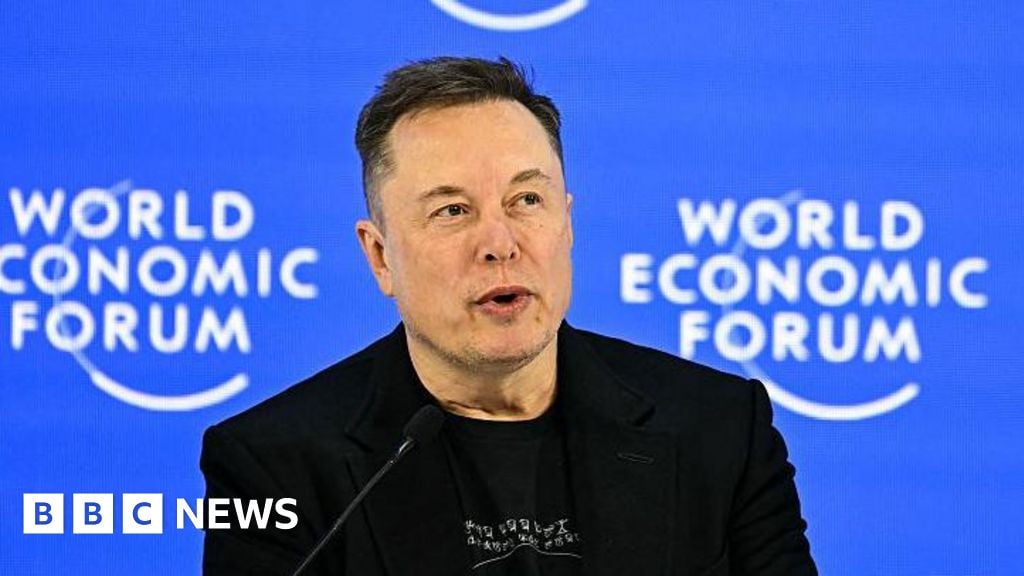
- Of the 17 CEOs on the trip, only Elon Musk of Tesla and Jensen Huang of Nvidia were given seats on Air Force One.
- Confirmed attendees include Tim Cook of Apple, Larry Fink of BlackRock, and executives from Boeing, Citigroup, Exxon and Mastercard.
- Additional tech executives on the trip include Sanjay Mehrotra of Micron, Chuck Robbins of Cisco, and Cristiano Amon of Qualcomm, according to a White House official.
- Meta will be represented by its recently appointed president Dina Powell McCormick rather than CEO Mark Zuckerberg.
Analysis
- Apple and Tesla face binary event risk on any bilateral tariff or market-access statement from the summit. AAPL derives roughly 19% of revenue from Greater China; TSLA's Shanghai gigafactory accounts for more than half of global deliveries. A concrete tariff reduction or market-access concession would be a direct margin tailwind for both, while a failure to deliver binding commitments would reverse any pre-summit positioning in China-exposed US equities within the same session.
- Nvidia's inclusion in the CEO delegation creates a direct tension with US semiconductor export controls on advanced chips to China. Any summit language implying relaxed export restrictions on AI chips would be immediately material for NVDA and the broader AI chip complex, including the newly public Cerebras. Conversely, if the summit produces no export-control relief, Nvidia's China revenue gap, currently estimated at several billion dollars annually since the H20 restrictions, remains structurally unresolved.
- BlackRock's presence alongside Citigroup and Mastercard signals the summit is targeting financial-sector market access concessions, potentially including expanded foreign ownership limits in Chinese asset management or payments. China's record April trade surplus, now a diplomatic liability for Beijing, gives it an incentive to offer financial-sector openings as a concession that does not directly reduce export volumes. A credible financial-access announcement would be a near-term catalyst for BLK and MA China-expansion narratives.
Historical Context
- May 2025
The US-China Geneva trade truce produced a 90-day tariff pause that triggered a sharp single-session rally in China-exposed US equities. That episode established the pattern where summit-adjacent bilateral statements generate immediate positioning moves in AAPL, TSLA, and semiconductor names ahead of any implementation detail.
- Nov 2023
The Biden-Xi summit at Woodside produced restoration of military-to-military communication but no tariff or market-access commitments. Markets initially rallied on the optics then gave back gains within a week when no binding trade language materialized, setting a precedent for the gap between CEO delegation symbolism and durable trade outcomes.
- 2019-2020
Phase One of the US-China trade deal included financial-sector opening commitments, allowing foreign firms including BlackRock to establish wholly owned Chinese mutual fund businesses. The mechanism of using financial-access concessions to offset trade-surplus criticism is a proven template the current delegation composition directly echoes.
Connected Events

China April exports surge 14.1% year-on-year, imports also hit record
China's April exports surged 14.1% year-on-year to a record, widening the bilateral trade surplus immediately before the summit and handing US negotiators a concrete figure to demand structural concessions against.

China factory-gate inflation hits 45-month high as Iran war energy shock spreads globally
China's PPI hit a 45-month high in April, narrowing PBoC easing room and increasing Beijing's incentive to secure tariff relief at the summit to reduce imported cost pressures on manufacturers already facing margin compression.
Apple and Intel reach preliminary chip-making agreement
Apple's preliminary foundry agreement with Intel, carrying White House support, signals Apple is managing China exposure on two tracks simultaneously: summit diplomacy for near-term tariff relief while reshoring chip manufacturing to reduce long-run supply chain dependency.
Further reading


See Indexa more often on Google
Mark Indexa as a preferred source — your Top Stories will surface more Indexa coverage.