IEA warns oil markets face 'red zone' crunch by July-August
Fatih Birol identifies full reopening of the Strait of Hormuz as the single most important fix to the Iran war energy shock.
Briefing
- Global oil markets risk a severe supply crunch by July-August as falling inventories, reduced Middle Eastern exports, and peak summer travel demand converge simultaneously.
- IEA Executive Director Fatih Birol said at Chatham House in London that "this may be difficult and we may be entering the red zone in July-August if we don't see some improvements."
- The proximate supply constraint is the disruption to oil exports from the Middle East linked to the Iran war, with Hormuz closure compounding the tightening inventory trend.
- Birol identified a full and unconditional reopening of the Strait of Hormuz as the single most important policy solution available to ease the shock.
- If Hormuz remains restricted into peak summer demand, energy traders will face an environment of simultaneously low global stocks and constrained export supply, increasing the probability of a sharp price spike.
Analysis
- Energy-driven inflation becomes structurally entrenched through Q3 as the IEA's July-August 'red zone' warning, combined with the Hormuz closure now at 80 days, removes any credible near-term supply relief. Jefferies' Kumar already projected oil 25-30% higher in six months; a confirmed summer crunch validates that trajectory. The sovereign fiscal channel is the second-order effect: governments subsidising fuel costs will widen deficits at the long end, reinforcing the 30-year Treasury's move above 5.19% and compressing the probability window for any Fed easing.
- Airlines, fuel-intensive industrials, and consumer discretionary face a compounding cost squeeze through Q3 with no near-term hedge available. Walmart's 7% share drop on fuel-cost consumer pressure is a leading indicator: if the IEA crunch materialises in July-August, the consumer spending contraction accelerates into back-to-school and early holiday planning periods. Retailers and airlines that have not locked in fuel hedges through summer are most exposed, and forward guidance cuts in Q2 earnings will likely precede the physical crunch.
- The UAE's second Hormuz bypass pipeline, confirmed for 2027 completion, means crude backwardation remains structurally supported through at least mid-2027 regardless of any diplomatic resolution short of a full Hormuz reopening. Birol's identification of Hormuz reopening as the single most important policy lever confirms no alternative supply route can offset the 20% of global seaborne supply currently blocked. Long-dated crude futures and energy infrastructure equities with Middle East exposure face a sustained bid as the forward supply deficit is now institutionally validated.
Historical Context
- 2022
Russia's invasion of Ukraine disrupted roughly 10% of global seaborne oil and gas trade. European governments responded with large-scale energy subsidies totalling hundreds of billions of euros, widening fiscal deficits and contributing directly to the 2022-2023 sovereign bond sell-off. The fiscal-to-rates transmission is the precedent most relevant to the current Hormuz scenario.
- 1990
Iraq's invasion of Kuwait removed roughly 4-5% of global oil supply, triggering a near-doubling of crude prices within weeks. The mechanism matches the current setup: low inventory buffers amplified the shock beyond what the physical supply loss alone would justify. Strategic petroleum reserves were released only after prices had already spiked sharply.
- 1979-1980
The Iranian Revolution and Iran-Iraq War successively disrupted Hormuz-adjacent flows, producing two oil price shocks in three years. The second shock arrived when inventory buffers were already depleted from the first, magnifying the price response. The IEA was founded precisely in response to the 1973-1979 supply shock cycle.
Connected Events

30-year Treasury yield hits highest since 2007 as inflation fears keep long-end pressure elevated
The 30-year Treasury yield has already reached its highest level since 2007 at 5.19%, with Jefferies' Kumar projecting oil 25-30% higher in six months and flagging government fuel subsidy spending as a fiscal multiplier on long-end yields. The IEA warning directly validates Kumar's oil thesis and accelerates the fiscal borrowing channel he identified.
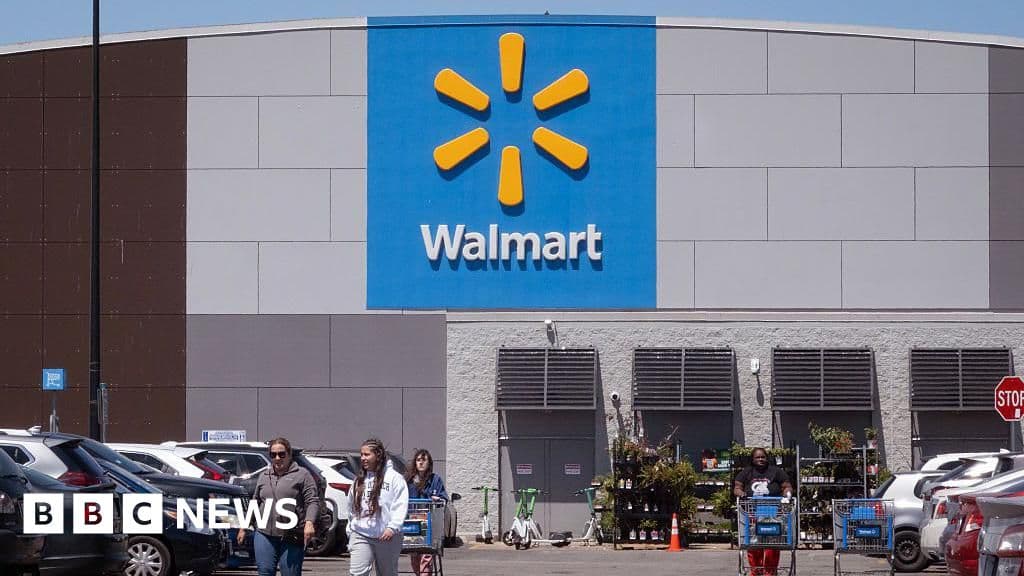
Walmart issues cautious outlook as fuel costs squeeze US consumers
Walmart's 7% share drop after citing fuel costs squeezing US consumers provides the retail-level demand signal that confirms the IEA's macro-level supply warning is already transmitting to consumer spending behaviour, with Walmart signalling potential price increases that would further erode real purchasing power.

UAE fast-tracks second Hormuz bypass pipeline for 2027 completion
The UAE's fast-tracked second Hormuz bypass pipeline targeting 2027 completion, combined with Trump's oscillating signals on an Iran deal now in its 80th day of Hormuz closure, confirms that no supply-side resolution is available within the IEA's July-August window, making the crunch scenario a base case rather than a tail risk.
Further reading


See Indexa more often on Google
Mark Indexa as a preferred source — your Top Stories will surface more Indexa coverage.
