Briefing
- The 30-year Treasury yield topped 5.19%, reaching its highest level since before the 2008 financial crisis, as inflation concerns continued to drive long-end selling.
- A Bank of America survey shows 62% of global fund managers expect the 30-year Treasury yield to reach 6%, equalling its highest level since late 1999, against only 20% targeting a 4% yield.
- Jefferies chief economist Mohit Kumar attributed the global bond pressure to energy-driven inflation, government deficits, and UK-specific political instability, saying oil is going "25-30% higher in six months' time" even if a Middle East deal is reached.
- Kumar also warned that rate hikes are being priced in but "it's not justified" given inflation is likely to rise as much as growth is likely to fall, complicating the path for central bank responses.
- Every major government is expected to subsidise household fuel costs, Kumar noted, adding fiscal borrowing pressure at the long end of the curve across multiple sovereigns.
- UK 30-year gilt yields held near 5.773% and German 30-year bunds stood at 3.684%, keeping global long-end pressure elevated alongside US Treasuries.
Analysis
- Long-end sovereign yields face structural upward pressure across multiple jurisdictions as government fuel subsidy commitments layer additional fiscal borrowing onto already strained supply-demand dynamics at the 30-year. With 62% of fund managers targeting 6% on the 30-year Treasury and Jefferies' Kumar projecting oil 25-30% higher in six months, energy-driven inflation becomes self-reinforcing through the fiscal channel: higher oil forces subsidy spending, which widens deficits, which pressures term premia. UK gilts at 5.773% and German bunds at 3.684% confirm this is not a US-specific dynamic.
- Rate-sensitive equity sectors face a compounding second leg of multiple compression as the bond market's self-enforced tightening documented in the Warsh stories now carries explicit energy-inflation acceleration. Kumar's stagflationary framing, inflation rising while growth falls, closes the door on a Warsh pivot toward easing without destroying credibility. REITs, utilities, and long-duration growth equities already repriced on the 10-year at 4.619% must now absorb the scenario where neither the Fed nor the bond market provides relief.
- Japanese institutional demand for US Treasuries faces a structural reduction that amplifies the long-end sell-off. Japan's 2.1% annualised Q1 GDP print accelerates BoJ normalisation, raising domestic JGB yields and narrowing the rate differential that made US long bonds attractive to Japanese investors. Combined with Brent at $110 and Kumar's 25-30% oil upside forecast, Japanese importers face currency and inflation pressure that further reduces the institutional appetite for duration in foreign sovereigns.
Historical Context
- 2022
The UK gilt crisis of September-October 2022, triggered by unfunded fiscal stimulus, required Bank of England emergency intervention when 30-year gilt yields spiked above 5%. The mechanism, deficit-driven term premium expansion forcing central bank backstop decisions, is directly replicated by Kumar's warning that fuel subsidy commitments across major governments will compound long-end pressure simultaneously.
- 1999-2000
The 30-year Treasury yield last traded at 6% during 1999-2000, a period combining fiscal surpluses with Federal Reserve tightening into a late-cycle economy. The current setup is structurally opposite: deficits are expanding, inflation is energy-driven rather than demand-driven, and the central bank is constrained by stagflationary dynamics, making the yield path to 6% more disorderly than the prior episode.
- 1973-1974
The first oil shock embedded energy-driven inflation into sovereign fiscal accounts through subsidy programs that multiple governments adopted to shield households, expanding deficits and ultimately forcing central banks into harder choices between inflation control and recession. Kumar's explicit forecast of government fuel subsidies across major economies follows the same fiscal transmission channel.
Connected Events
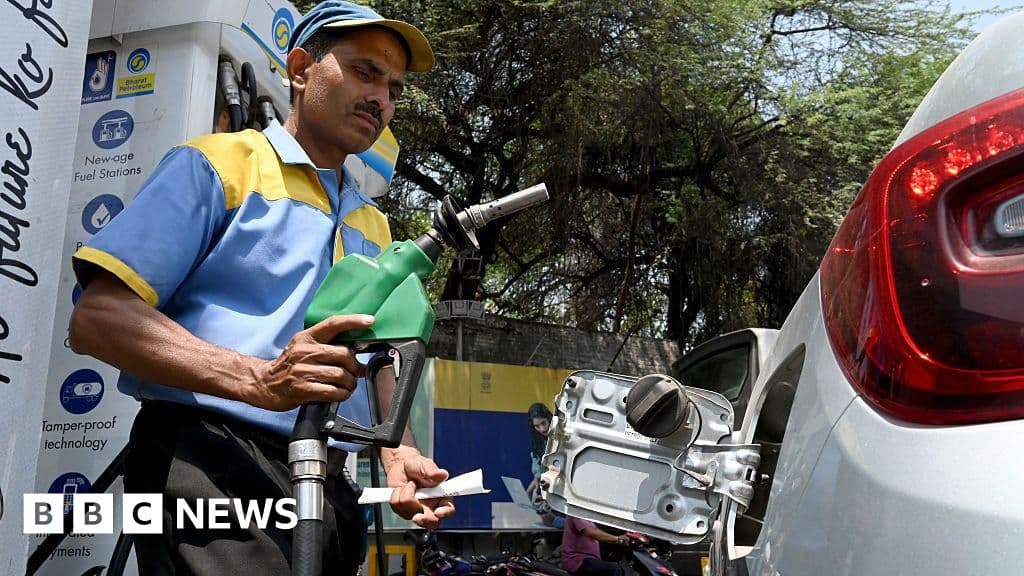
Oil swings as Trump signals optimism over Iran deal after 'clock is ticking' warning
Brent crude at $110 and Trump's 'clock is ticking' warning on Iran materially reduce near-term deal probability, directly supporting Kumar's 25-30% oil upside projection and making the energy-inflation fiscal subsidy loop more likely to materialise.

Bond market pushes rates higher as Kevin Warsh begins as Fed chair
Bond markets pre-emptively tightening as Kevin Warsh assumes the Fed chair role compounds the long-end pressure from this story: the Fed's credibility discount under Warsh means any yield spike driven by energy inflation and fiscal deficits cannot be offset by forward guidance without risking an immediate further selloff.

Japan Q1 GDP grows 2.1% annualised, far above 0.4% consensus
Japan's Q1 GDP at 2.1% annualised, more than five times consensus, accelerates BoJ normalisation and reduces Japanese institutional demand for US Treasuries, removing a key structural buyer precisely when the 30-year faces its heaviest supply and inflation pressure.
Further reading


See Indexa more often on Google
Mark Indexa as a preferred source — your Top Stories will surface more Indexa coverage.
