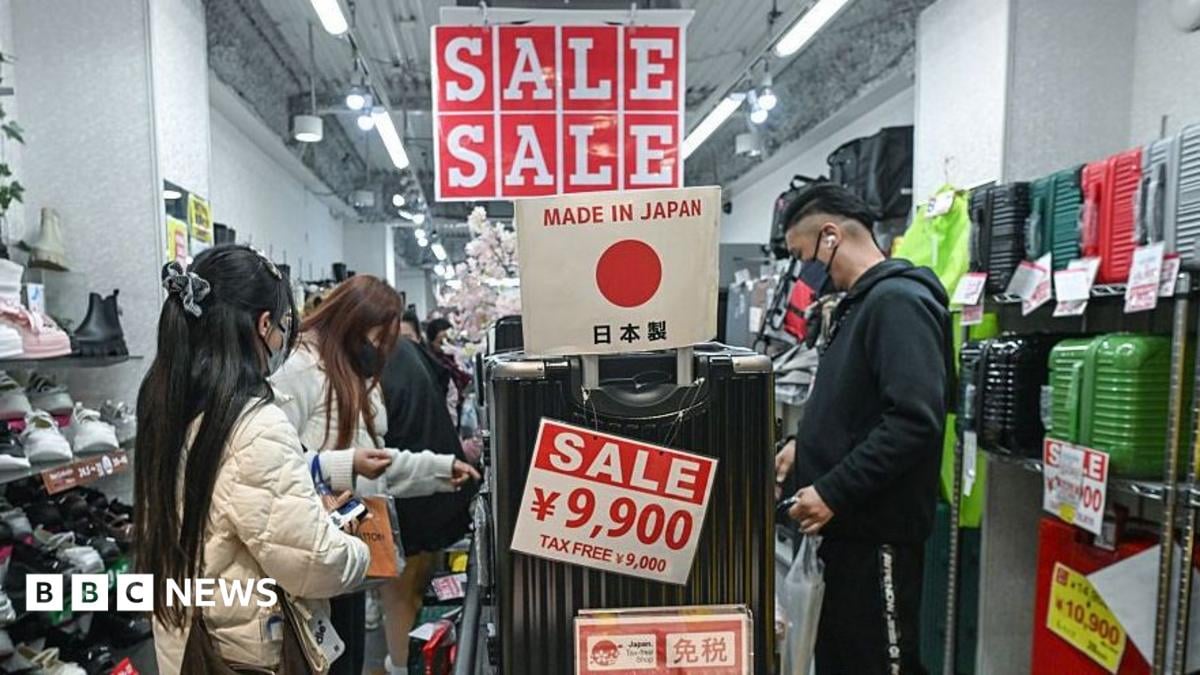
Bank of Japan raises rates to 31-year high as inflation persists
Decision passed 7-2, with yen falling despite tightening; BOJ tightening pace is fastest since 1990
Briefing
- The Bank of Japan has raised its policy rate to the highest level since 1995, extending a tightening cycle running at its fastest pace since 1990, with persistent inflation the stated driver.
- The rate decision passed by a 7-2 majority, with board members Toichiro Asada and Ayano Sato dissenting against the hike.
- The yen fell following the announcement, an unusual market response to a rate increase that suggests traders viewed the decision as already priced or the forward guidance as insufficiently hawkish.
- The hike reduces the yield differential that has made US assets attractive to Japanese investors, with carry-trade dynamics and capital flow patterns now under renewed scrutiny.
- Forward focus centres on whether the dissenting votes signal a ceiling approaching, and how quickly rising Japanese yields will pull domestic capital back from overseas positions.
Analysis
- Japanese institutional capital repatriation pressure on US Treasuries intensifies in the near term as the BOJ hike compresses the yield differential driving outbound carry flows. With 10-year US yields already at 5% following the Fed's 25bp hike, any narrowing of the US-Japan spread reduces the hedged return on dollar assets for Japanese life insurers and pension funds, the largest foreign holders of Treasuries. The 7-2 vote majority suggests policy continuity, making further hikes a live probability rather than a tail scenario.
- The yen's decline on a rate hike decision compounds the Fed-BOJ policy divergence trade: if hawkish BOJ forward guidance cannot strengthen the yen, dollar-funded carry positions into higher-yielding assets remain attractive, delaying the forced unwind that caused the August 2024 volatility episode. However, if subsequent BOJ communication turns more explicitly hawkish, the unwind risk re-emerges rapidly given the scale of short-yen positioning that survived this announcement.
- The simultaneous Fed hike and BOJ hike create a dual tightening environment for global duration holders that reinforces the term premium widening already flagged in the Fed decision context. Japanese investors facing higher domestic yields have reduced incentive to absorb US long-end supply, arriving precisely when the Fed's resumed hiking cycle adds to Treasury issuance pressure. REITs, utilities, and leveraged finance face the most direct mechanical transmission through compounding discount rate pressure from both directions.
Historical Context
- Aug 2024
A surprise BOJ rate hike triggered a rapid unwinding of yen carry trades, causing a global equity selloff and a spike in the VIX above 60. The mechanical link is direct: higher Japanese yields reduce the return on borrowing yen to fund positions in higher-yielding assets, forcing leveraged unwinds when the move exceeds hedging thresholds.
- 1995-2007
The multi-decade era of near-zero Japanese rates generated the original yen carry trade infrastructure, with Japanese institutional capital funding outflows into US and European assets. The BOJ's current tightening cycle is the first sustained reversal of this structural dynamic, making capital flow re-pricing a medium-term structural shift rather than a cyclical adjustment.
- 1989-1990
The BOJ's last comparably rapid tightening cycle preceded the collapse of the Japanese asset price bubble. The current cycle is described as the fastest pace since 1990, making the historical precedent relevant for gauging domestic Japanese asset market risk and the threshold at which rate hikes become self-limiting.
Connected Events

Fed raises rates 25bp for first time since July 2023
The Fed's 25bp hike under Warsh, the first since July 2023, means both the Fed and BOJ are simultaneously tightening, a configuration that directly pressures global duration and removes two of the largest sources of demand for long-dated bonds at the same time.

Dtcpay raises $25M Series A with SBI Group as strategic backer
SBI Group's strategic participation in dtcpay's Series A highlights accelerating Japanese institutional interest in stablecoin payment infrastructure, a flow that may intensify if rising domestic yields prompt Japanese financial groups to diversify into fee-generating fintech stakes rather than low-yielding foreign bonds.
Further reading

See Indexa more often on Google
Mark Indexa as a preferred source — your Top Stories will surface more Indexa coverage.