Briefing
- Mastercard's BitLicense positions the company to conduct regulated digital asset business in New York, the most stringent state-level crypto licensing jurisdiction in the US, directly supporting its commercial strategy around stablecoins and tokenized deposits.
- New York's NYDFS has issued approximately 40 BitLicenses since the programme launched in 2015; Mastercard's approval is one of only three granted in 2026, alongside GalaxyOne Prime and Zap Solutions.
- The licence follows Mastercard's agreement to acquire stablecoin infrastructure firm BVNK for up to $1.8 billion, including up to $300 million in performance-based payments, a deal expected to close later this year.
- Chief Product Officer Jorn Lambert said the company sees "clear regulatory frameworks" as playing "an important role in building trust and confidence as new forms of digital value move from experimentation toward practical application."
- Mastercard has not announced new consumer-facing crypto products tied to the licence; its near-term focus is on payment and settlement infrastructure connecting traditional rails with blockchain-based systems, a market it is also pursuing through partnerships with over 100 firms including Binance, Circle, Ripple, and PayPal.
- With the GENIUS Act having enshrined stablecoins in federal law, incumbents that now hold both a BitLicense and a pending stablecoin infrastructure acquisition will be better placed to win institutional settlement mandates from New York-based financial firms before smaller competitors can meet NYDFS compliance requirements.
Analysis
- Mastercard's combined BitLicense and pending BVNK acquisition creates a durable first-mover advantage in New York institutional stablecoin settlement that Visa and smaller fintech competitors cannot replicate quickly. NYDFS has issued roughly 40 BitLicenses over 11 years, with only three in 2026; the compliance runway for unlicensed competitors is measured in years, not quarters. With the GENIUS Act now providing federal stablecoin legal standing, New York-based banks and asset managers selecting settlement infrastructure partners will weight regulatory status heavily, concentrating early mandate flow toward MA.
- Visa faces structural competitive pressure in cross-border B2B payment rails as Mastercard assembles a regulated stablecoin stack: BitLicense, BVNK infrastructure, and a 100-plus partner network including Circle, Ripple, and PayPal. The GENIUS Act's federal stablecoin framework accelerates enterprise procurement timelines, meaning the window for Visa to build or acquire comparable regulated infrastructure in New York narrows materially in 2026. Visa's absence from the NYDFS licensed cohort is now a procurement objection, not merely a strategic gap.
- The ECB's active opposition to private stablecoins in Europe, combined with Mastercard's New York regulatory positioning, widens the USD-denominated stablecoin infrastructure gap relative to euro-denominated alternatives. Mastercard's 100-plus partner network, anchored by Circle's USDC, benefits disproportionately from the ECB blocking lighter MiCA liquidity rules and central bank backstop access for euro stablecoin issuers. Cross-border institutional flows seeking compliant stablecoin settlement will default to USD rails where regulatory clarity now exists at both state and federal levels.
Historical Context
- 2023–2024
Visa and Mastercard each accelerated crypto and stablecoin pilot programs, but neither held a New York BitLicense during the period. Mastercard's BVNK deal and BitLicense together mark the first time a card network has assembled a vertically integrated, NYDFS-regulated stablecoin settlement capability, raising the bar for Visa to match.
- 2015–2026
NYDFS launched the BitLicense in 2015 and has issued roughly 40 approvals in 11 years, an average under four per year. The programme's stringency has historically acted as a structural moat: firms that clear NYDFS compliance gain durable differentiation in institutional client procurement over unlicensed competitors.
- Early 2015
When New York introduced the BitLicense, several crypto firms including Bitfinex and Kraken exited the New York market rather than pursue compliance. That self-selection effect concentrated regulated digital asset business among well-capitalised incumbents, a dynamic that now favours Mastercard over crypto-native challengers with thinner compliance infrastructure.
Connected Events

ECB blocks proposal to ease euro stablecoin rules and extend central bank backstop
The ECB's blocking of lighter euro stablecoin rules under MiCA, with Lagarde explicitly opposing a central bank backstop for private issuers, structurally advantages USD stablecoin rails where Mastercard now holds New York regulatory standing alongside Circle, its key USDC partner.
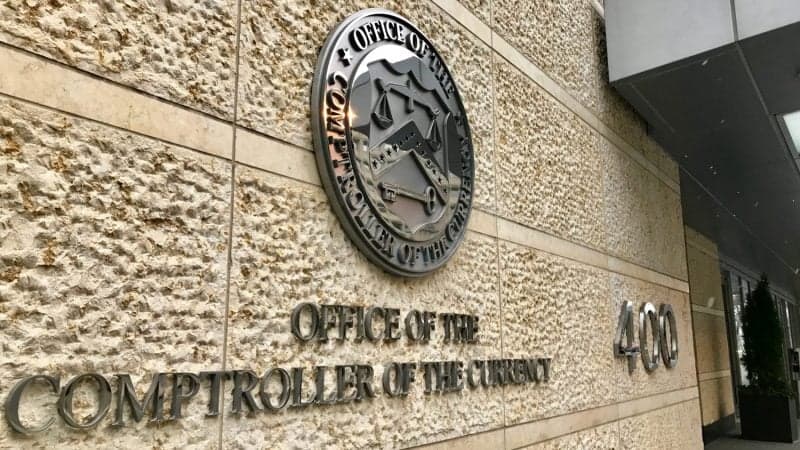
Crypto lobby challenges Warren's claim that OCC bank charters for Coinbase, Ripple are unlawful
The OCC's conditional national trust bank charter approvals for Circle, Coinbase, Ripple, and Paxos, now legally defended against Warren's challenge by the Digital Chamber, expands the pool of federally supervised counterparties Mastercard can integrate into its BVNK-powered settlement network without incurring unregulated counterparty risk.
Further reading



See Indexa more often on Google
Mark Indexa as a preferred source — your Top Stories will surface more Indexa coverage.