Japan suspected of intervening in FX market as yen surges
Asian equities rally alongside yen strength, with intervention timed ahead of BOJ policy decision
Briefing
- The yen surged sharply against the dollar in a move analysts and markets attributed to direct Japanese government intervention in currency markets, with Tokyo declining to confirm the action.
- The suspected intervention preceded a scheduled Bank of Japan policy decision, a sequencing that suggests authorities sought to establish a stronger yen floor before any BOJ guidance landed.
- Japan hinted at US support for the move, a notable diplomatic signal given Washington's historical sensitivity to currency manipulation accusations.
- Asian equities rebounded alongside the yen surge, with stocks rising across the region as the dollar weakened.
- Attention now shifts to US inflation data, which will determine whether the dollar's pullback extends or reverses the yen's gains independently of any intervention effect.
Analysis
- Japanese exporters and Nikkei-listed manufacturers face near-term earnings headwinds if the yen intervention floor holds ahead of the BOJ decision. A stronger yen directly compresses yen-denominated earnings repatriation for exporters such as Toyota and Sony. With the Nikkei already down roughly 4% in the prior AI chip sell-off, a sustained yen move adds a second simultaneous headwind to Japanese equities, compounding rather than offsetting the pressure from the global tech rout.
- Emerging market central banks with dollar-funded carry exposure face accelerated unwind risk if US inflation data extends the dollar's pullback. Indonesia's rupiah is structurally vulnerable: Bank Indonesia already lost its governor unexpectedly, and a sustained dollar weakening driven by benign US CPI removes the primary carry incentive that has supported the currency through the leadership transition. A softer dollar does not uniformly benefit EM; it can accelerate capital rotation away from high-yielders if US rate cut expectations reprice.
- Japan's hint at US diplomatic support for the intervention is the most consequential signal for dollar-yen positioning. If Washington tacitly endorsed yen strength, it removes the political ceiling that previously constrained BOJ normalization and yen appreciation. This shifts the risk asymmetry in yen options markets: traders pricing intervention as a one-off event rather than a coordinated policy stance may be underpricing the probability of further BOJ tightening guidance at the upcoming meeting.
Historical Context
- Oct 2022
Japan conducted its largest-ever yen intervention, spending roughly $43 billion across multiple rounds to defend the currency after it breached 150 per dollar. The BOJ simultaneously maintained ultra-loose policy, creating a recurring pattern of MOF intervention offsetting BOJ easing, a structural tension that the current sequencing with the BOJ decision ahead appears designed to resolve.
- Sep 2022
Japan's first yen-buying intervention since 1998 occurred when USD/JPY approached 146, establishing that Tokyo's intervention threshold is tied to pace of move rather than a fixed level. Markets subsequently tested that threshold repeatedly, forcing repeated rounds of intervention and demonstrating that unilateral action without BOJ policy alignment has limited durability.
- 1985
The Plaza Accord established the precedent for US-endorsed G7 currency intervention to weaken the dollar. Japan's current hint at US support directly echoes that framework; if Washington has informally endorsed yen strengthening, it replicates Plaza-style coordination and removes the manipulation-accusation risk that has historically constrained Japanese FX action.
Connected Events

Bank Indonesia Governor Perry Warjiyo resigns early in surprise move
Bank Indonesia Governor Perry Warjiyo's surprise resignation left the rupiah without a credible central bank anchor precisely as EM currencies face dollar volatility from the Japanese intervention and incoming US CPI data, compounding pressure on Asian FX broadly.
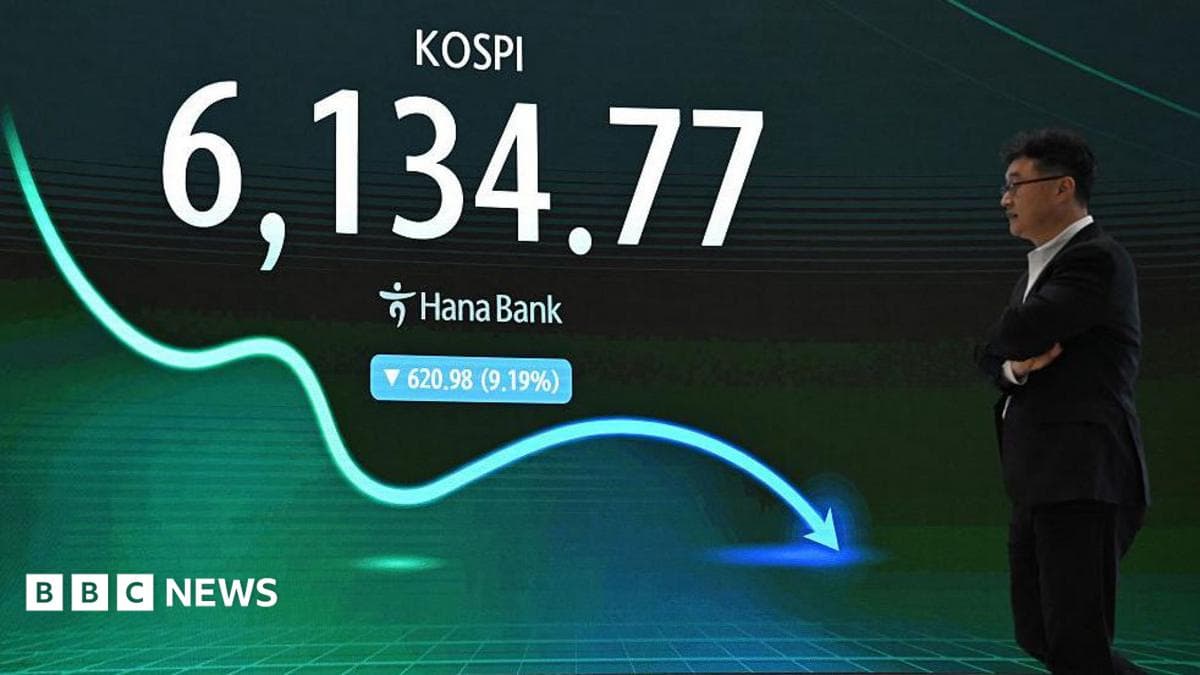
South Korea's Kospi extends AI chip rout as SK Hynix results disappoint
The Kospi's AI chip-driven sell-off, which pushed the index to its lowest level since April and saw the Nikkei fall 4%, means Japanese and Korean equities enter the yen intervention episode already technically damaged, making the additional exporter earnings headwind from yen strength more consequential than it would be from a position of index strength.
Further reading

See Indexa more often on Google
Mark Indexa as a preferred source — your Top Stories will surface more Indexa coverage.