Briefing
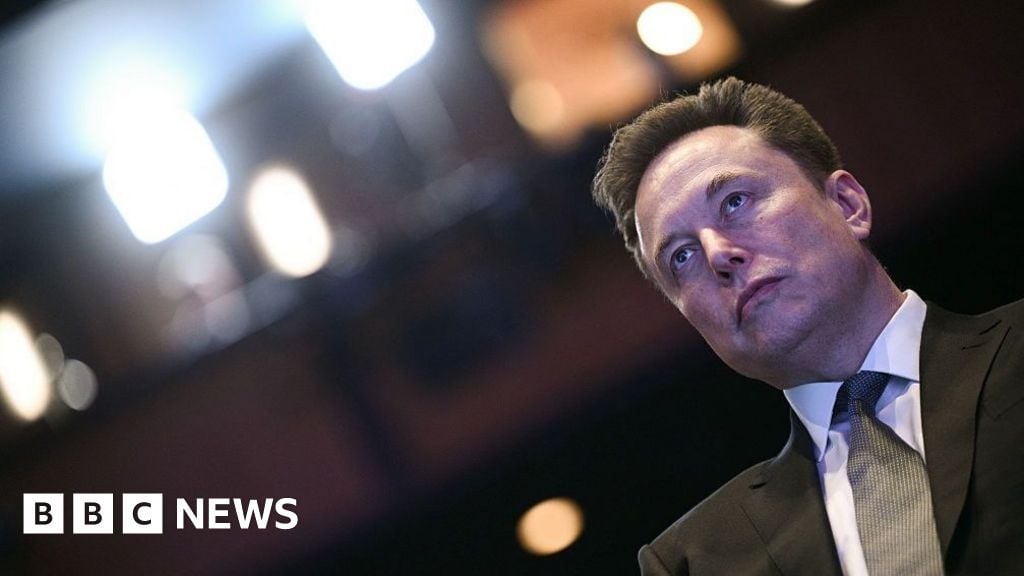
- A California jury unanimously rejected Musk's $150 billion lawsuit against OpenAI, Sam Altman, and Greg Brockman, finding that Musk had filed his claims after the applicable statutes of limitations had expired, leaving all defendants not liable on all counts.
- The case centred on Musk's $38 million in donations to OpenAI and his allegation that Altman reneged on the organisation's founding nonprofit mission by shifting it toward a commercial structure and deepening its relationship with Microsoft; the Microsoft claims were dismissed as a matter of law following the jury's findings.
- Filing deadlines were central to the verdict: claims tied to Altman and Brockman's nonprofit duties carried a three-year limit, while claims of improper personal profit carried a two-year limit, both of which Musk had exceeded.
- Altman testified that Musk not only supported OpenAI becoming for-profit but sought long-term personal control, saying a "hair-raising moment" arose when co-founders asked Musk what would happen to that control upon his death and "he said something like, 'maybe it should pass to my children.'"
- Musk slammed the verdict as a "technicality" and his lawyer confirmed he intends to appeal, saying the "war" is "not over"; separately, OpenAI's countersuit accusing Musk of bad-faith tactics, an xAI antitrust suit against OpenAI and Apple, and an xAI trade-secret theft claim against OpenAI all remain active.
- Removal of this lawsuit eliminates the most financially significant legal overhang on OpenAI as the company pursues its for-profit restructuring and a potential IPO, though other challenges remain ahead.
Analysis
- OpenAI's for-profit restructuring and ongoing capital raises face materially lower legal friction now that the $150 billion lawsuit is dismissed. The case was the single largest financial claim against the company; its removal allows prospective investors to underwrite OpenAI equity without pricing an existential damages scenario. Microsoft's co-defendant exposure, dismissed as a matter of law, similarly removes a governance overhang that complicated MSFT's AI partnership disclosures.
- Altman's testimony that Musk sought dynastic control of OpenAI, including inheritance to his children, directly weakens Musk's public narrative that the lawsuit was principled opposition to mission drift. This reputational damage compounds existing xAI competitive headwinds: investors and enterprise customers evaluating xAI versus OpenAI now have sworn testimony portraying Musk as a self-interested actor rather than a good-faith whistleblower, potentially affecting xAI's fundraising terms.
- The remaining active litigation cluster, OpenAI's countersuit against Musk, xAI's antitrust suit against OpenAI and Apple, and xAI's trade-secret claim, keeps AAPL in the legal crossfire at a moment when its AI integration roadmap is already under pressure from OpenAI's separate lawsuit over the ChatGPT partnership. A two-front legal exposure involving OpenAI as both plaintiff and defendant against Apple adds complexity to Apple's AI vendor strategy with no near-term resolution path.
Historical Context
- 2023-2024
OpenAI's transition from nonprofit to capped-profit structure, and its deepening Microsoft partnership, were the precise events Musk's lawsuit challenged. The statute of limitations ruling means courts never evaluated the merits of whether that transition breached fiduciary duties, leaving the governance question legally unresolved even as the case is closed.
- Nov 2022
Musk's public departure from Twitter's board and subsequent hostile acquisition were preceded by similar allegations of mission betrayal, establishing a pattern where Musk uses litigation and public narrative simultaneously. That playbook produced reputational costs for counterparties without decisive legal outcomes, a dynamic now repeated with OpenAI.
- 2015-2018
Musk co-founded OpenAI with a $38 million contribution and later departed the board. His donations and early governance role are the factual predicate for all dismissed claims; the statute of limitations ruling means the three-year clock on nonprofit-duty claims started running from events in that founding period, not from his public criticism of the for-profit pivot.
Connected Events

OpenAI prepares legal action against Apple over ChatGPT integration deal
OpenAI is simultaneously preparing legal action against Apple over an undelivered ChatGPT integration commitment, meaning the company exits the Musk lawsuit as plaintiff in a separate high-profile tech dispute, compounding Apple's AI partnership legal exposure.
SpaceX targets June 12 Nasdaq debut in what could be largest IPO ever
SpaceX's June 12 Nasdaq IPO targeting adds a second Musk-affiliated entity to public market scrutiny within weeks of the OpenAI verdict, meaning Musk's credibility as narrated by Altman's sworn testimony enters the public record precisely as institutional investors are underwriting SpaceX equity.
Further reading
See Indexa more often on Google
Mark Indexa as a preferred source — your Top Stories will surface more Indexa coverage.