Briefing
- Apple has locked in Broadcom as a key chip supplier through 2031 under a $30bn commitment, extending U.S. Domestic production and reducing exposure to offshore supply chains.
- The agreement covers 15 billion U.S.-made chips, making it one of the largest single domestic chip procurement deals in the industry.
- The deal includes an expansion of Broadcom's Colorado factory, adding physical U.S. Manufacturing capacity tied directly to Apple's component needs.
- The commitment forms part of Apple's broader domestic investment pledge, signalling that tariff-driven reshoring pressure continues to shape multi-year supplier contracts.
- Broadcom's position as a critical Apple supplier is now secured well into the next decade, raising the competitive barrier for any rival chipmaker seeking to displace it in Apple's supply chain.
Analysis
- Broadcom's revenue visibility through 2031 materially de-risks AVGO's earnings profile and raises the competitive moat against any rival chipmaker attempting to displace it in Apple's supply chain. The $30bn commitment across 15 billion chips effectively locks in a baseload revenue stream that reduces Broadcom's exposure to semiconductor cycle volatility. For AVGO, this is an upward re-rating catalyst on earnings quality, not just volume, as long-duration contracts command lower discount rates on future cash flows.
- Apple's $30bn domestic procurement pledge, combined with Toyota's $3.6bn Texas relocation and comparable reshoring commitments from other multinationals, raises the floor cost of U.S.-made advanced components. Broadcom's Colorado factory expansion will compete for the same skilled labor and specialized equipment as other domestic chip buildouts, potentially pushing input costs higher for the entire U.S. semiconductor manufacturing supply chain, including TSMC Arizona and Intel fabs.
- Qualcomm and other fabless chipmakers supplying Apple face structurally higher displacement risk now that Apple has demonstrated willingness to commit $30bn in long-duration contracts to lock in a preferred domestic supplier. Any Apple component category not yet under a similar long-term agreement becomes a negotiating target for renegotiation or in-house substitution over the next contract cycle, compressing margin expectations for suppliers without equivalent strategic lock-in.
Historical Context
- 2022
The CHIPS and Science Act created federal incentives for domestic semiconductor manufacturing, making large-scale U.S. fab expansion commercially viable for suppliers. Broadcom's Colorado expansion is a downstream beneficiary of that policy architecture, which Apple's procurement commitment now reinforces.
- 2021-2023
Apple's multi-year TSMC capacity reservation agreements, including commitments for N3 and N2 nodes, established the precedent of Apple using long-duration supply contracts to secure manufacturing priority and shape supplier capex allocation, directly analogous to this Broadcom deal structure.
- 2020
Apple's transition from Intel to Apple Silicon involved a multi-year TSMC supply commitment that locked Intel out of Mac CPU supply. The Broadcom deal follows the same playbook: secure a strategic supplier with a long-duration contract before a competitor can establish an equivalent relationship.
Connected Events
Toyota shifts Tacoma production from Mexico to Texas in $3.6bn expansion
Toyota's $3.6bn relocation of Tacoma production from Mexico to Texas, driven by tariff-reshoring pressure, establishes that multi-billion-dollar domestic manufacturing commitments are now the baseline corporate response to the current trade regime, not outlier decisions. Apple's $30bn Broadcom deal sits in the same policy-driven reshoring wave.
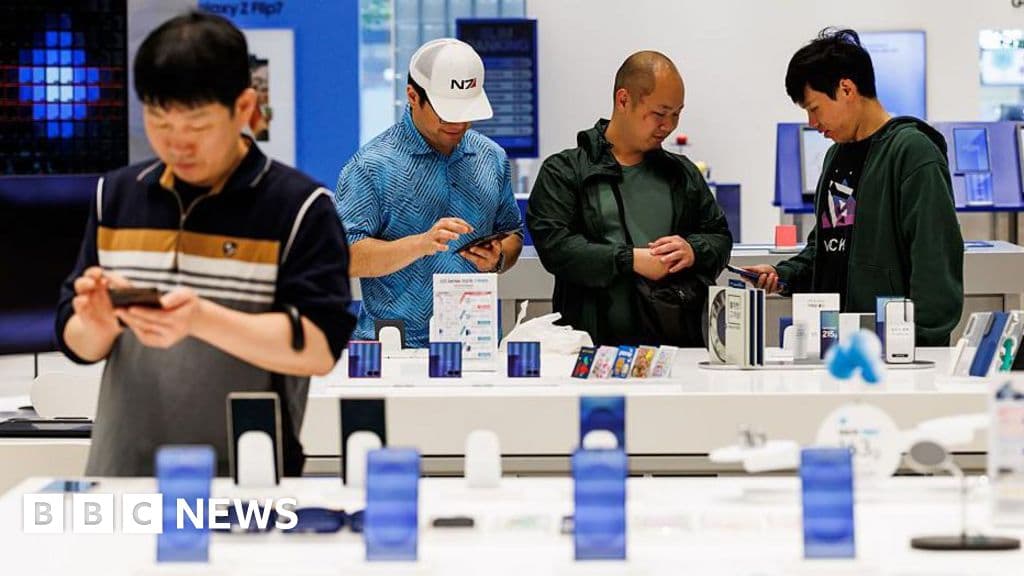
Samsung Q2 operating profit surges ~1,900% on AI memory chip demand
Samsung's Q2 profit surge on AI memory demand, followed by a share price decline on valuation exhaustion, highlights that AI chip supply contracts are priced for perfection. Broadcom's locked-in Apple revenue through 2031 differentiates it from cycle-exposed memory peers facing that same valuation ceiling.
Further reading

See Indexa more often on Google
Mark Indexa as a preferred source — your Top Stories will surface more Indexa coverage.